


Why Did God Choose the Mountains?
- Divine Trail
- Treks
- Why Did God Choose the Mountains?
Why Did God Choose the Mountains?
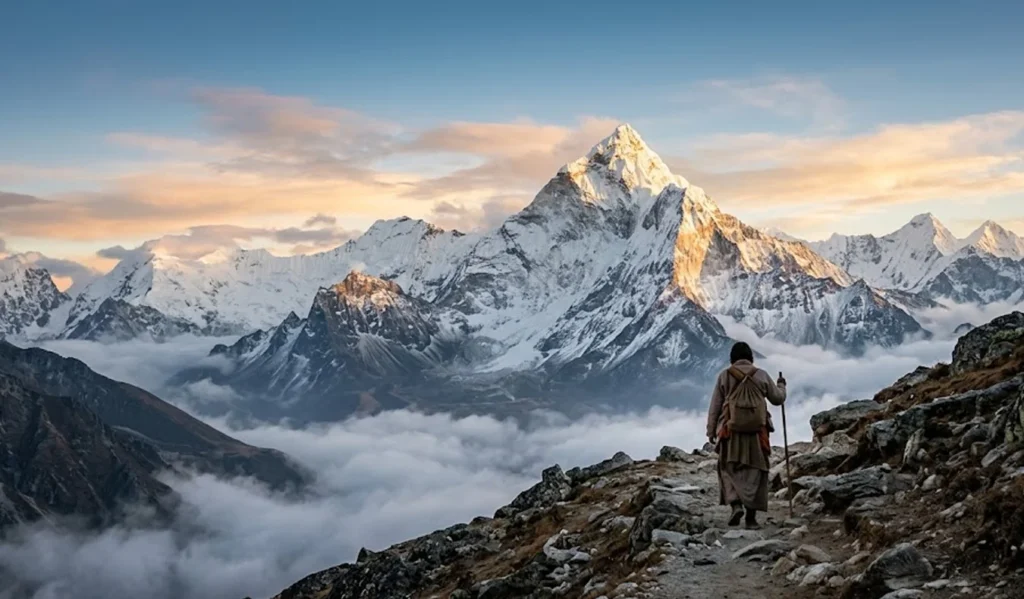
From ancient scriptures to spiritual journeys, mountains have always held a sacred place in human history. Across cultures and religions, they are seen not just as natural wonders, but as places where the divine feels closer. Whether it is the snow-covered peaks of the Himalayas, the silence of Mount Kailash, or the sacred temples hidden among cliffs, mountains have long been chosen as spaces for prayer, meditation, and transformation.
But why mountains?
A Place Closer to Heaven
Mountains rise above the ordinary world. Their towering presence naturally creates a feeling of awe and humility. When people climb higher, they leave behind noise, distractions, and chaos. In many spiritual traditions, mountains symbolize the journey from the material world toward enlightenment.
In Hinduism, Lord Shiva resides on Mount Kailash — not in a palace, but in the stillness of the mountains. In Christianity, important moments like Moses receiving the Ten Commandments happened on mountains. In Buddhism, monks often meditate in remote mountain caves to seek peace and clarity.
Mountains remind us that spiritual growth requires silence, patience, and perspective.
Silence Speaks Loudly in the Mountains
One of the most powerful things about mountains is their silence. Far away from cities and constant movement, the mountains offer stillness that allows people to truly listen — not just to nature, but to themselves.
The sound of flowing rivers, cold winds, rustling trees, and distant bells creates a natural form of meditation. Many travelers say they feel spiritually lighter in the mountains because the environment naturally slows the mind down.
Perhaps God chose mountains because they allow humans to disconnect from the world and reconnect with their soul.
Mountains Test Faith and Strength
No sacred mountain journey is ever easy.
Pilgrimages like the Kedarnath Temple trek, the Amarnath Cave Yatra, or the journey to Mount Kailash demand physical endurance, mental strength, and devotion. The difficult paths symbolize life itself — filled with challenges, uncertainty, and perseverance.
The mountain does not offer comfort easily. It teaches surrender, patience, and faith. Every step becomes meaningful.
Nature Feels Purest in the Mountains
Mountains are untouched, raw, and deeply powerful. The purity of fresh air, sacred rivers, ancient forests, and open skies creates an atmosphere where people naturally feel connected to something greater than themselves.
In many traditions, nature itself is considered divine. Mountains become temples without walls — places where spirituality exists not through rituals alone, but through experience.
Watching sunrise over the Himalayas or standing beneath millions of stars in silence can feel more spiritual than words can explain.
The Mountains Teach Humility
No matter how powerful or successful a person may be, mountains make everyone feel small. Their size, age, and strength remind us that humans are only a tiny part of creation.
This humility is important in spirituality. Mountains strip away ego. They teach surrender. They remind people that peace is found not in control, but in acceptance.
Perhaps this is why sages, monks, saints, and seekers throughout history have chosen the mountains to meditate and discover truth.
More Than a Destination
Mountains are not just places to visit — they are places to feel.
People often return from the mountains changed. Some find clarity. Some find healing. Others simply find silence after years of noise. Maybe that is why God chose the mountains — because they help humans rediscover what truly matters.
In the end, mountains are more than landscapes. They are reminders that the journey upward is not only physical, but spiritual too.